A Week in Ibiza and What a Stack of Books Quietly Changed
Last summer I spent a week in Ibiza with my daughter.
It was deliberately unstructured. No plan beyond being there, spending time together, and stepping away from the usual pace of work. I took a small stack of books with me, partly because I had been meaning to read them for a while and partly because it felt like the right environment to do it properly rather than in fragments between meetings.
What only really became clear afterwards is that the books did not sit independently of each other. They started to build on one another in a way that shifted how I was thinking across the week. Not through any single idea, but through accumulation and contrast over time.
I started with PITCH by Danny Fontaine.
What struck me was not that it introduced entirely new concepts, but that it forced a level of discipline in how those concepts come together. It made me pay closer attention to how ideas are structured and how they are experienced by someone on the receiving end, rather than how they feel when you are forming them.
That distinction is easy to overlook. Familiarity can create a false sense of clarity. You know what you mean, so you assume it is obvious to others.
I found myself sketching things out quite quickly, trying to make those ideas more tangible. Not aiming for a finished outcome, but using the act of writing and drawing to expose where things were not as coherent as I might have assumed.
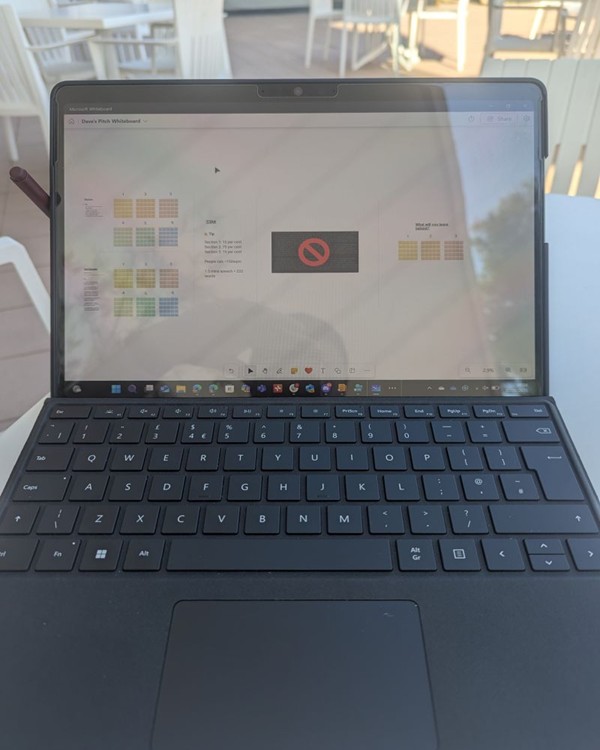
Moving from that into The Creative Act: A Way of Being by Rick Rubin shifted the lens.
It sits further away from what most would consider technical reading, but that distance is part of the value. The focus moves from how ideas are expressed to how they are formed and how we engage with them in the first place.
There is an underlying challenge in there around perspective. In architecture, we spend time defining viewpoints as a way of understanding a system. It is less common to apply that same thinking to our own assumptions, even though those assumptions shape the viewpoints we choose.
Reading it in that context made it feel less abstract. It becomes less about creativity as a concept and more about how we observe, interpret, and respond to what is in front of us.
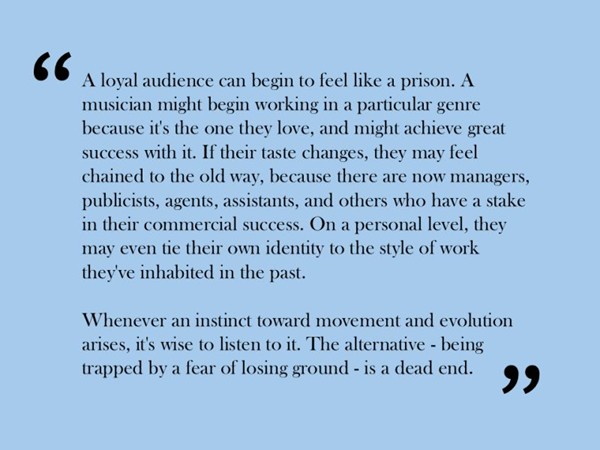
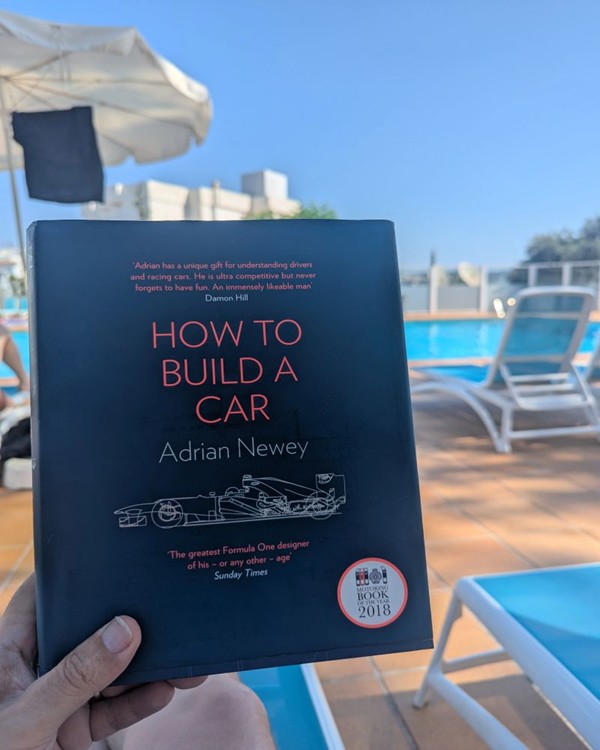
The third book shifted the focus again, but in a way that made the earlier points more concrete.
How to Build a Car by Adrian Newey is grounded in engineering at a level of detail that leaves little room for generalisation. What comes through is the amount of iteration required to get something genuinely high performing into the real world. Not just the design itself, but the constant refinement, the marginal gains, and the willingness to revisit decisions as new information becomes available.
There is also a clear sense that success is rarely the result of a single breakthrough. It is the accumulation of small decisions, each of which may seem insignificant in isolation, but collectively define the outcome.
That translates more directly than it might first appear. In technology, and particularly in architecture, there is often a tendency to focus on the larger decisions. Platform choice, patterns, structural direction. This book brings the focus back to the detail and the discipline required to make those decisions hold up under real conditions.
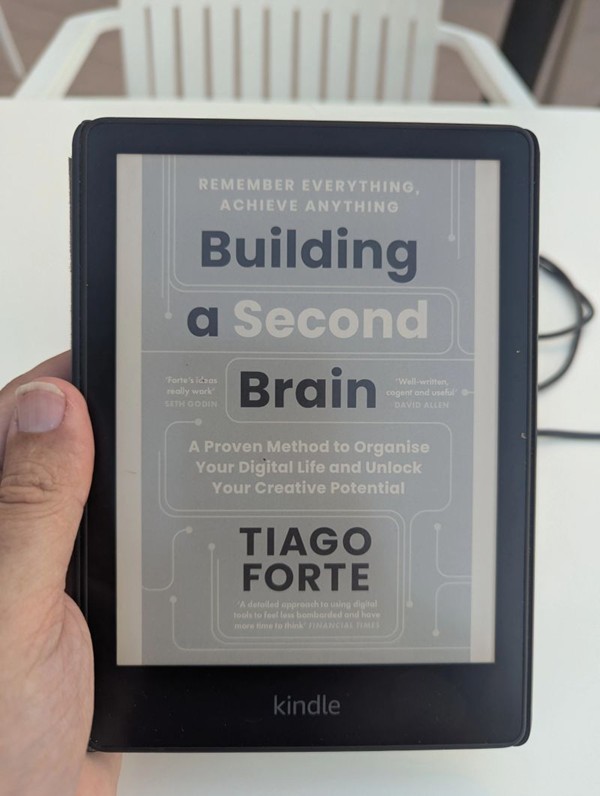
After that I went back to Building a Second Brain by Tiago Forte, which I had started previously and not finished.
Coming back to it in a different environment made the practical aspects land more clearly. The idea of externalising thinking is not new, but the structure here makes it easier to apply consistently.
The “box” concept stayed with me. Giving something a defined space before it is fully formed creates a sense of commitment that does not depend on clarity. It changes how you start. Instead of waiting until something is well understood, you create a place for it and allow it to develop there.
That is relevant beyond note-taking. It speaks to how work begins more generally, especially when direction is not yet fully understood.
The final set of books was the Thrive series by Ginger Booth.
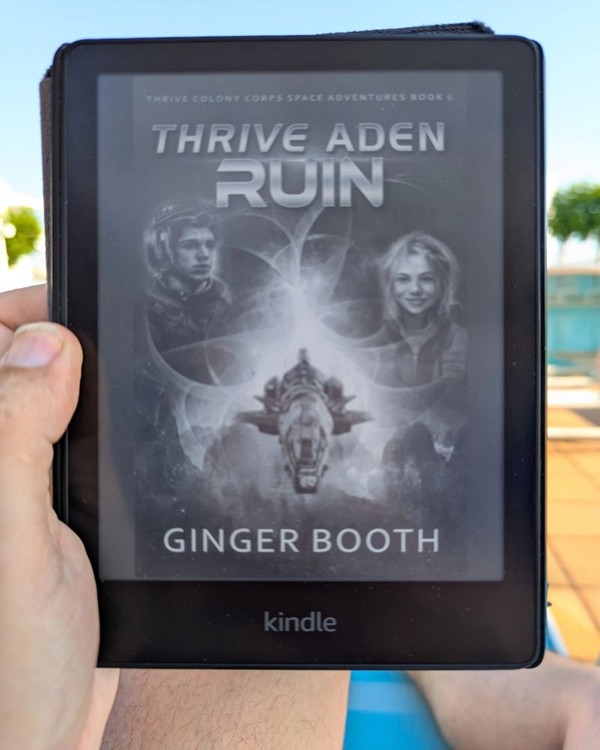
On the surface this is a shift into science fiction, but the underlying patterns are familiar. Systems that have grown over time, environments that are no longer stable, and groups trying to coordinate across boundaries with different priorities and constraints.
As those systems evolve, the original intent becomes harder to maintain. Decisions become less about clear outcomes and more about managing trade-offs. Coordination becomes as important as capability.
It is difficult not to see parallels with large organisations, particularly where scale introduces complexity that cannot be managed through simple structures or single viewpoints.
Looking back, the value of the week was not in any individual book rather It came from how they came together. Each one adjusted the frame slightly. First in how ideas are shaped and communicated, then in how they are formed, then in how they are executed with precision, followed by how they are structured and retained, and finally how they behave at scale.
None of that was planned, but together it created a shift that would not have happened in the same way if the books had been read in isolation, of course the environment played a role as well. Being away from the normal cadence of work changes how things land. There is more space to follow a thought through properly rather than capturing the headline and moving on.
The same material, read in a more fragmented way, would likely have resulted in a different outcome and it raises a super interesting question around how often we expect different thinking, while keeping the conditions exactly the same?
Continue exploring