My First AI-Generated Artwork — and What It Means for the Next Generation
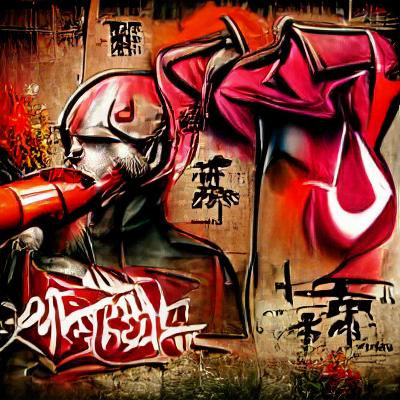
What a start to MS Ignite this week. I have seen a lot of technology announcements over the years, but I don't think anything has stopped me in my tracks quite like seeing Azure AI Art in action for the first time — and then actually creating something with it myself.
I am still on the waitlist for broad access, so getting to try this at Ignite felt like a real treat. You type in a description — just plain English, no code, no complex tooling — and a few seconds later you are looking at an original piece of artwork that simply did not exist moments before. I will be honest, my first reaction was to laugh. Not in a dismissive way, but in that slightly disbelieving way you do when something genuinely surprises you. I kept thinking: did I just do that?
The image I created is, objectively speaking, probably not going to end up on the wall of an art gallery. But that is entirely beside the point. The point is that I — someone with absolutely zero artistic ability — made something original. Something that felt creative. And I did it in seconds, with words.
The Technology Behind It
What Microsoft has built here sits on top of some remarkable foundational work in generative AI. The model has been trained on an enormous corpus of images and has learned to understand the relationship between language and visual concepts in a way that would have seemed like science fiction even five years ago. The fact that it is being surfaced through Azure, with all of the enterprise governance and responsible AI guardrails that come with it, is what makes this particularly interesting from a professional standpoint.
The waitlist is still long, and rightly so. These are powerful tools and getting the rollout right matters. But the pace at which this is moving is extraordinary — and this week at Ignite, you could feel that energy in every conversation.
What My Kids Will Do With This
This is what is really playing on my mind, though. Technology like this being broadly available means my kids are going to grow up with creative tools that are fundamentally different from anything I had. When I was learning to draw in school — badly, I should add — creativity felt gated. You either had the talent or you did not. The tools available to you reflected that. A pencil and paper are democratised, yes, but the ability to turn an idea in your head into a visual reality still required a skill set most of us simply do not have.
That barrier is dissolving. A child who has a vivid imagination but cannot translate it onto paper will soon be able to type a sentence and see that imagination rendered visually in front of them. Think about what that does for storytelling, for problem-solving, for confidence. Think about a kid who has always been told they are "not creative" discovering that actually, creativity was never the issue — only the tools were.
A Broader Reflection on AI
There is a lot of noise right now about AI and what it means — some of it exciting, some of it alarmist, most of it somewhere in the middle. What I know from standing at Ignite this morning and making something that genuinely surprised me is this: we are at one of those genuinely inflection-point moments. The kind where, looking back in ten years, you will be able to point to this and say that is where things changed.
It does not mean everything changes overnight. The waitlist is long for a reason. The responsible deployment of generative AI in enterprise requires thought and care. But the direction of travel is clear.
I cannot wait to see what comes next — and even more, I cannot wait to see what my kids create with all of this when it is broadly and freely available to them. That thought, more than anything technically impressive I saw at Ignite today, is what is making me smile.
Continue exploring